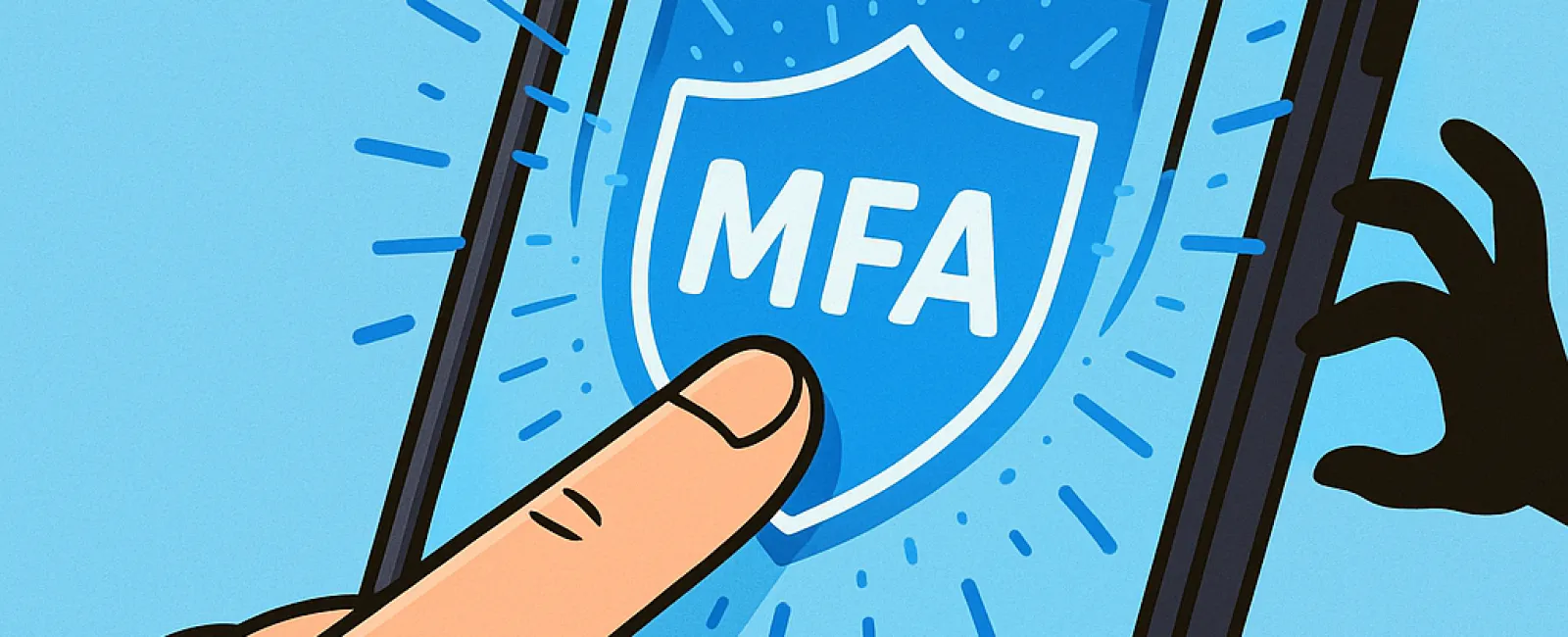
Just like you wouldn't drive without buckling your seat belt or leave your office unsecured overnight, why risk going online without multifactor authentication (MFA) protecting your digital assets?
MFA acts as a powerful second barrier for your online security. Instead of relying solely on passwords—which can be stolen, guessed, or phished—it adds an additional verification step such as a text message code, authentication app prompt, or fingerprint scan. Even if someone acquires your password, they hit an impassable wall without completing this extra step.
Your Simple Step to Fortify Security
If your password is the lock on your front door, then MFA is the alarm system that ensures extra safety. While not mandatory, isn't it reassuring to know there's a backup layer of protection guarding your most sensitive information?
MFA is essentially a quick additional confirmation that it's truly you accessing your account. Known by various terms—"two-factor authentication," "two-step verification," or "one-time password"—they all share the same goal: verify your identity with multiple steps before granting access.
Forms of MFA include confirmation emails when creating accounts, security questions, text-based codes, push notifications, and phone call verifications—most requiring just a simple tap or code entry.
How MFA Defends You in Real-World Scenarios
While MFA is quick and effortless for you—just entering a code or tapping a notification—it creates a significant barrier for cybercriminals. If someone tries to access your account without authorization, MFA immediately alerts you through notifications or requires an additional code, signaling a potential password breach. This early warning lets you update your credentials before any data can be compromised. You stay one step ahead of hackers.
MFA also blocks intrusions that rely on stolen passwords. Even if a hacker convinces an employee to give up login details, the extra verification stops them. Microsoft reports that MFA decreases the risk of account breaches by over 99.2%—and an astounding 99.99% for accounts fully protected by MFA.
Essential Accounts Where MFA Must Be Enabled
Prioritize turning on MFA for these critical services:
- Banking and financial platforms
- Email and cloud storage services
- Social media accounts
- Work-related logins containing client or company data
Enabling MFA is typically straightforward—most popular platforms include built-in MFA options. Choose the method that suits you best and incorporate it into your login routine. Utilizing authenticator apps also significantly enhances security for employees.
In summary, implementing MFA is a free, fast, and effective way to deter the bulk of hacking attempts. Setting it up today can save you from months or even years of costly damage and data recovery.
The easiest route to enable MFA is by contacting your IT provider. A savvy MSP will guide you seamlessly through the setup process. Need cybersecurity expertise? Click here or call us at 312-564-5446 to schedule your Initial Consultation with our security team now.