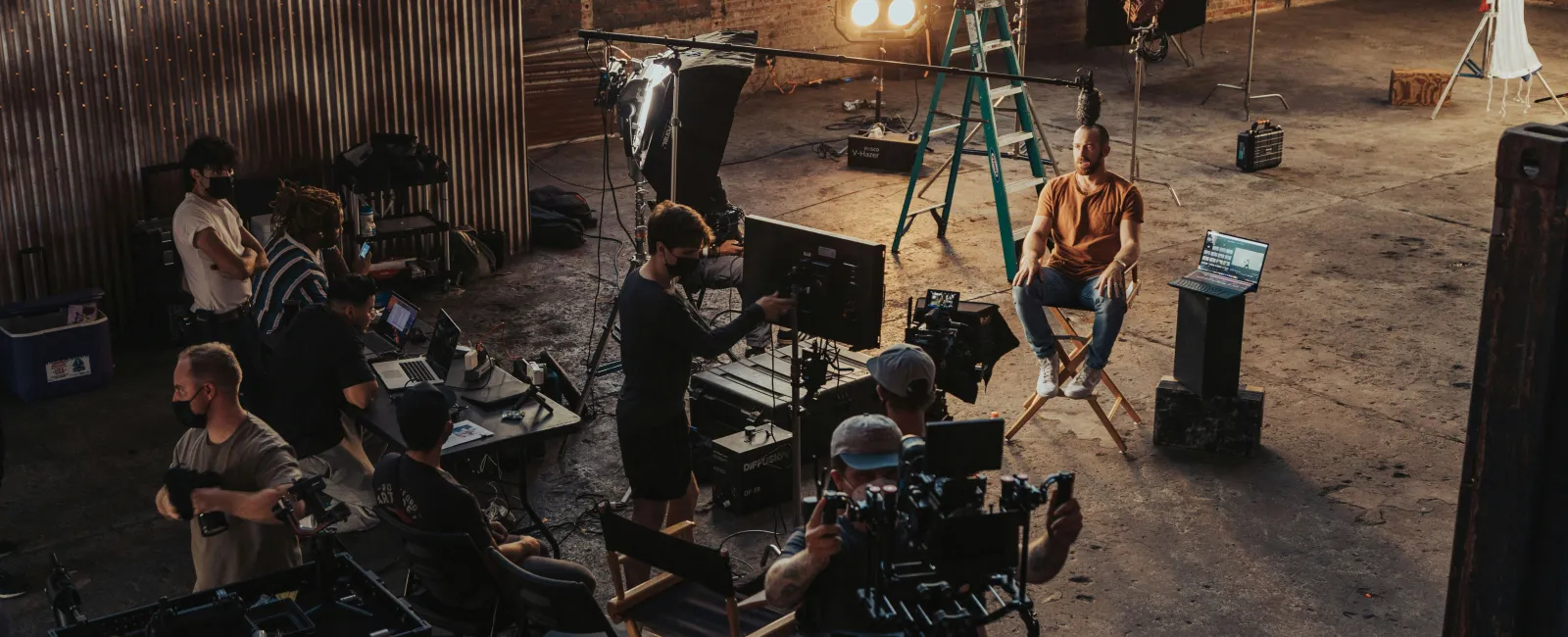
Running a media production company or content studio is like
managing a constant stream of complex, high-stakes projects. Every shoot
generates thousands of files. Every edit suite demands uninterrupted processing
power. Every deadline depends on systems working perfectly. And every bit of
pre-release content, unreleased footage, or client intellectual property is a
target.
But here's the part that keeps producers and studio heads up
at night. The IT infrastructure supporting production isn't optional or
background-level. It's the backbone of the entire operation. A storage system
failure costs billable production time and missed deadlines. A ransomware
attack doesn't just interrupt workflows. It can lock up pre-release content,
halt revenue, and tank client relationships. A backup that was never tested
means unrecoverable footage and projects lost to the void.
And the complexity keeps growing. High-resolution formats
(4K, 8K), multi-camera shoots, cloud rendering, remote collaboration across
time zones, and software license management across Adobe, Avid, DaVinci
Resolve, and specialized tools all create an IT environment that's harder to
manage than ever. Managed IT services give production companies a way to handle
all of this, whether you're supplementing a small internal tech team or
building IT infrastructure from the ground up. This article breaks down the specific
IT challenges facing media production companies today and explains why a
managed services approach makes sense, especially for studios with up to 300
employees.
The IT Challenges Media Production Companies Face
Storage and File Management at Scale
If you produce video content at any scale, you know that
file sizes are massive. A single minute of uncompressed 4K footage at 24 frames
per second requires approximately 6GB of storage. Multiply that across multiple
camera angles, multiple shoots per week, and long-term archival requirements,
and you're looking at petabytes of data that need to be organized, accessible,
and protected.
Professional media storage requirements are staggering. The
global media and entertainment storage capacity exceeded 200 exabytes in 2025,
with local network storage accounting for over 85 exabytes and cloud-based
storage exceeding 80 exabytes. That growth is driven by higher-resolution
formats, more cameras per project, and the rising use of AI in post-production
workflows.
The challenge isn't just storing the files. It's keeping
editors connected to them in real time, maintaining performance across
network-attached storage (NAS) and storage area network (SAN) systems, managing
backup and archival workflows, and ensuring that proxy files, project caches,
and render outputs don't eat up capacity. Many production studios end up with a
patchwork of external drives, local storage, and cloud services, each managed
separately. That's a recipe for bottlenecks, performance problems, and lost
files.
Cybersecurity Threats Targeting Pre-Release Content
Ransomware and data theft in the media industry aren't
theoretical. They're happening now, and the stakes are massive. Pre-release
film footage, unreleased music recordings, script details, and client projects
represent millions of dollars of intellectual property and competitive
advantage. One successful attack means attackers can demand ransom by
threatening to release the content to the internet or sell it to competitors.
The numbers back this up. According to industry data, nearly
60% of media and entertainment organizations have reported ransomware attacks.
Double extortion attacks are common, where attackers steal data first, then
encrypt systems and demand payment or threaten to release the stolen files
online. Production studios are particularly attractive targets because of the
high-value IP they handle and the urgency of their work. A ransomware attack
during post-production of a theatrical release doesn't just cost money. It
disrupts distribution schedules and damages client relationships.
Beyond ransomware, media companies face phishing attacks
targeting employees, zero-day exploits targeting editing software and render
farms, DDoS attacks, and insider threats. According to recent industry
research, it takes media companies an average of 224 days to identify a breach,
nearly two weeks longer than the global average. That delay means attackers
have a much longer window to extract data before the breach is discovered.
High-Performance Infrastructure and Render Farm Complexity
High-resolution editing, color grading, VFX rendering, and
motion graphics all demand specialized hardware and networking. A render farm
handling 4K or 8K content, or handling complex 3D rendering tasks, needs to be
sized, optimized, and managed correctly. Bottlenecks in networking, storage, or
rendering queue management mean projects slip behind schedule.
Many production studios manage their own edit suites and
render farms, or they partner with specialized facilities. Either way, the IT
infrastructure has to deliver consistently. That means fast networking (gigabit
or multi-gigabit), low-latency storage, workstation configuration specific to
each application (Adobe Premiere, Final Cut Pro, Avid, DaVinci Resolve), and
monitoring to catch performance degradation before it impacts production.
Without proper IT strategy, studios end up with aging
workstations, inconsistent configurations, outdated software versions, license
compliance problems, and no visibility into what's actually running on each
editing or rendering system. That lack of standardization and visibility
creates downtime, frustration for editors and VFX artists, and higher support
costs.
Remote and Hybrid Production Workflows
Remote editing, color grading, and collaborative review
sessions are now standard practice, not exceptions. But remote access to
massive proxy files, shared project files, and rendering queues introduces
latency, security, and collaboration challenges that weren't present when
everyone was in the same facility.
VPN access works, but it can be slow. Cloud-based project
collaboration platforms help but introduce new security considerations.
Freelance editors and colorists working from home need secure access to project
files without exposing intellectual property. Multi-location teams need
reliable synchronization of project data, cache files, and render outputs. And
everyone involved needs fast, responsive access without waiting for files to
transfer.
Managing this kind of distributed infrastructure requires
careful planning around network architecture, cloud integration, security
controls, and backup strategy. Many studios patch it together as they grow,
then struggle with performance and reliability problems.
Cybersecurity Compliance and Client Data Protection
Production companies often handle client intellectual
property, final cuts, script details, and sensitive business information.
Clients expect that data to be protected under strict security standards. Some
clients impose their own security requirements and audit processes. Others
require compliance with specific frameworks like SOC 2 Type II or ISO 27001.
Without a structured approach to access controls,
encryption, audit logging, and incident response planning, studios struggle to
meet these expectations. A breach or data loss incident doesn't just disrupt
production. It damages client relationships and can trigger contractual
penalties.
What Managed IT Services Look Like for a Media Production Company
Managed IT services for media production go beyond help desk
support. A quality managed services provider understands production workflows,
high-performance infrastructure demands, and the cybersecurity risks specific
to content creation. Here's how each pillar of managed IT support works in
practice for studios.
Specialized IT Support for Production Systems
When a render farm goes offline or an editor's workstation
crashes during a critical deadline, response time and technical expertise
matter. Managed IT support
for media production means your team has engineers who
understand editing software, storage systems, and render farm architecture. It
covers the full range: workstation troubleshooting, storage system
optimization, render queue management, software license coordination, and
vendor support.
Framework IT works with media production companies to
provide unlimited remote and onsite support through engineers, not generic help
desk staff. Support covers the details that matter in post-production:
troubleshooting Adobe Creative Cloud synchronization issues, managing Avid
interplay connectivity, optimizing DaVinci Resolve database performance, and
coordinating with storage vendors when NAS systems need upgrades.
This also includes the vendor coordination that eats up
hours. When storage performance degrades, Framework IT works directly with
storage vendors to diagnose and fix the issue. When software licenses expire or
need renewal across a team of editors and colorists, the MSP handles the
licensing logistics. When workstations need hardware upgrades to support new
software versions, the MSP plans and executes those upgrades with minimal
disruption to production.
Infrastructure Strategy Aligned to Production Needs
Most production studios don't have a dedicated IT director
or cloud architect. What they need is someone with that level of expertise who
understands production workflows and can build a technology roadmap. That's the
role of a virtual CIO,
or vCIO. For studios that have an internal tech team, a vCIO
works alongside those people to provide the strategic layer that internal teams
often lack the bandwidth to deliver.
A vCIO for a media production company conducts assessments
of your current storage, networking, and workstation setup. They identify
bottlenecks, scalability constraints, and security gaps. They develop a roadmap
for infrastructure improvements, cloud integration, and technology investments
that align with your production plans. They recommend solutions for remote
collaboration, backup and disaster recovery, and software license optimization.
For studios evaluating cloud rendering, migrating to
proxy-based workflows, upgrading storage systems, or implementing remote
collaboration tools, this kind of strategic guidance prevents expensive
mistakes and ensures infrastructure investments support production efficiency
and growth.
Cybersecurity Built for Content Protection
A managed cybersecurity
program for a media production company addresses the unique
risk of pre-release content theft and ransomware targeting production files. It
includes next-generation endpoint protection that detects threats based on
behavior patterns, not just known signatures. It includes 24/7 security
monitoring, email security to catch phishing targeted at production staff, and
security awareness training specific to content protection.
It also covers the specific controls that protect
intellectual property: file encryption for storage systems, access logging to
track who accessed which project files, immutable backup systems that can't be
encrypted by ransomware, and incident response plans tested specifically for
content theft and data loss scenarios. This is the kind of security stack that
would cost a production company hundreds of thousands of dollars to build
internally. Through managed services, studios of any size access enterprise-grade
protection at a fraction of that cost.
Why the Managed Services Model Works for Media Production
Predictable Costs Replace Infrastructure Surprises
One of the biggest financial headaches for production
studios is unpredictable infrastructure costs. Emergency storage upgrades,
workstation hardware failures, unexpected bandwidth increases, software license
true-ups, and after-hours support calls all create budget volatility. Managed
IT services convert that uncertainty into a fixed monthly fee that covers
support, strategy, and security.
Framework IT takes this a step further with its Business
Optimization Pricing Model. Studios that align their infrastructure to
data-driven best practices earn reduced monthly pricing over time. After 15+
years of operational data, Framework IT has validated that partners who align
to these best practices experience approximately 30% fewer IT disruptions. For
production companies, fewer disruptions means better on-time delivery, fewer
missed deadlines, and more billable project time.
Specialized Engineers vs. Hiring Internal IT Staff
Hiring a full-time IT person to manage production
infrastructure seems straightforward, but the cost and capability gaps are
significant. According to Robert Half's 2025 Technology Salary Guide, a
qualified IT hire costs $80,000 to $120,000+ in salary alone, plus 30-40% in
benefits, $15,000 to $30,000 per year in tools and licensing, and $3,000 to
$5,000 in ongoing training. That gets you 1 person with 1 set of skills, no
vacation backup, no 24/7 coverage, and a single point of failure if they leave.
A managed services provider gives you a team of specialists
who understand storage systems, networking, workstation configuration, render
farm optimization, security, and cloud architecture. For studios with existing
tech staff, an MSP acts as an extension of that team, filling coverage gaps and
adding expertise in areas like cybersecurity and production-specific
optimization. At Framework IT, that team includes 30 engineers with
certifications spanning CompTIA, Cisco, Microsoft, AWS, and cybersecurity disciplines
like CISSP. With 95% in the Chicagoland area.
Proactive Infrastructure Management Beats Reactive Firefighting
The break-fix model, where you call someone when something
breaks, doesn't work for production environments. A render farm outage or
storage system failure isn't just an inconvenience. It halts revenue and misses
deadlines. You pay emergency rates for rapid response, suffer production
downtime, and never address the root causes that keep creating problems.
Managed services flip that model. Proactive monitoring
catches performance degradation before it becomes an outage. Scheduled
maintenance and upgrades keep systems current and performing at capacity.
Regular capacity planning prevents storage from filling up unexpectedly.
According to CompTIA industry analysis, organizations using managed services
recover 3 times faster from incidents than those relying on break-fix support.
For production companies, faster recovery means shorter project delays and better
client satisfaction.
What Chicago-Area Media Production Companies Should Look for in an MSP
Not every managed services provider is equipped to serve
media production companies. The specialized infrastructure, the sensitivity of
pre-release content, and the performance demands of editing and rendering
workflows require an MSP that understands the industry. Here's what to
evaluate:
·
Production
industry experience. Does the MSP work with other media production
companies, content studios, or post-production facilities? Do they understand
editing software, render farms, storage systems, and the pace of production
work?
·
High-performance
infrastructure expertise. Can they design and optimize storage systems,
networking, and workstations for production workflows? Do they understand
NAS/SAN systems, render farm architecture, and cloud integration?
·
All 3
pillars: support, strategy, and security. Some MSPs only do help desk.
Others bolt on security as an afterthought. Look for a provider that delivers
integrated support, strategic advisory, and a full cybersecurity stack focused
on content protection.
·
Content
protection and cybersecurity focus. Does the MSP understand the specific
risks of ransomware targeting pre-release content? Can they implement access
logging, immutable backups, and incident response plans tailored to content
studios?
·
Local
presence. When you need onsite support for workstation issues or storage
system emergencies, response time matters. A Chicago-based team with engineers
in the Chicagoland area can be at your studio quickly.
·
Scalability
and co-managed flexibility. Your MSP should be able to grow with your
studio. Whether you have 20 employees or 300, the provider should offer a model
that works as your sole IT department or as an extension of your existing tech
team.
·
Transparent
reporting. Monthly reports on system performance, security metrics, and
infrastructure health give you visibility into what's happening in your IT
environment and confidence that your investment is producing results.
The Bottom Line
Media production companies can't afford to treat IT as an
afterthought. The storage demands are massive, the cybersecurity threats are
real and directed at high-value content, and the cost of downtime is measured
in missed deadlines and lost revenue. Managed IT services provide a structured,
proactive approach that protects pre-release content, keeps editors and render
farms productive, and gives studio leadership the strategic guidance they need
to make smart technology decisions.
For Chicago-area and nationwide studios with up to 300
employees, this isn't a luxury. It's a foundation for running a secure,
efficient, and competitive production operation.
Framework IT is a Chicago-based managed services provider
with nationwide reach, specializing in IT support, strategy, and security for
media production companies and content studios with up to 300 employees.
Whether your studio needs a full IT department or an extension of your existing
tech team, we work with production facilities across the Chicagoland area and
nationwide to build secure, high-performance technology environments that
protect pre-release content and support production efficiency.
Schedule a
conversation with our team to learn how managed IT services
can work for your production studio.