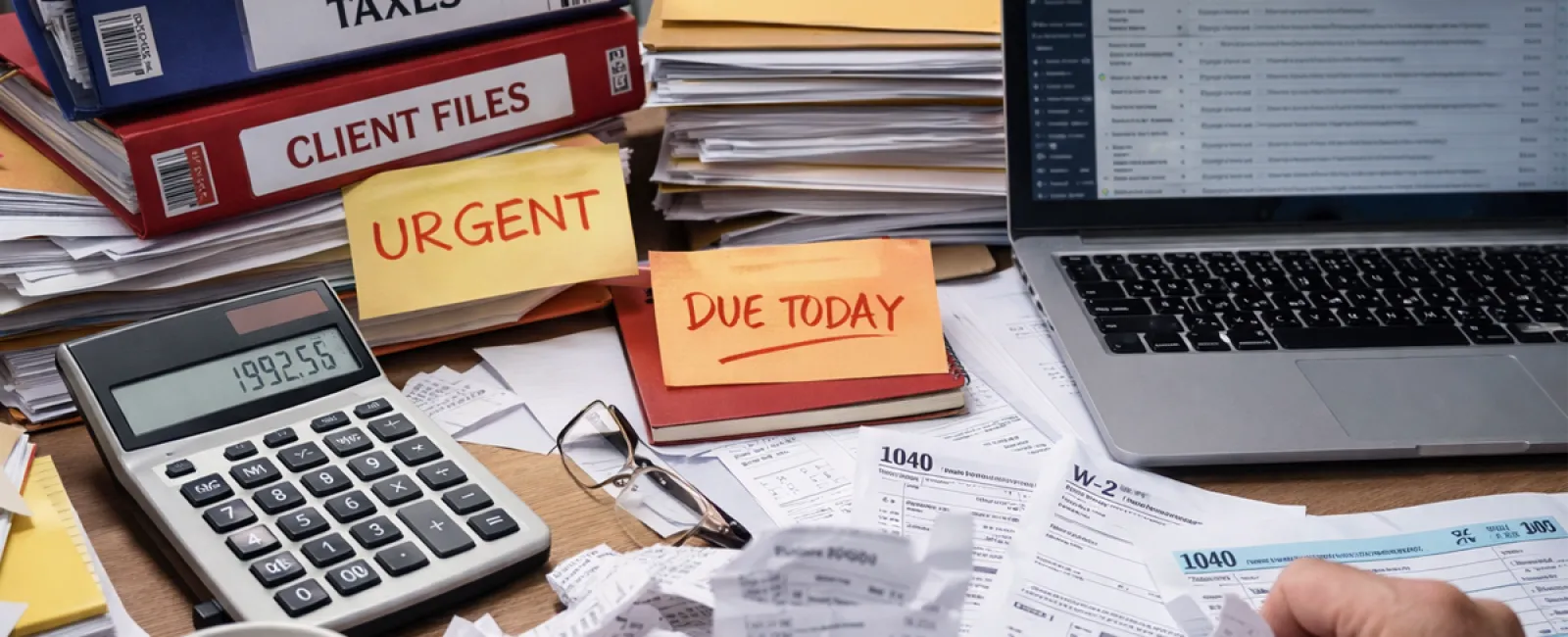
It's March — the busiest time of year for accountants.
Your accounting team is overwhelmed, your bookkeepers are racing against time, and looming deadlines create nonstop pressure. Inboxes overflow with urgent messages, each demanding immediate attention.
Everyone is focused, heads down, just trying to navigate through the chaos of tax season.
You know this well.
But so do cybercriminals.
Security experts report a dramatic surge in phishing attacks during tax season, with March seeing nearly a 28% rise in tax-related scam emails compared to calmer months. These fake emails don't scream danger—they blend seamlessly with daily business communications, catching busy professionals off guard.
This spike is no accident.
It's strategic timing.
Discover the looming threats and four essential strategies to shield your business from becoming an easy target.
The Pressure on the Supply Chain
What many overlook is that:
Hackers don't just go after accounting offices.
They exploit the frantic environment tax season creates.
During tax season:
- Clients hurriedly send sensitive documents without usual caution
- Staff rush processes, skipping standard verification steps
- Requests like "Just send the file" override typical safeguards
- Verification procedures get bypassed because everyone is overwhelmed
The entire workflow accelerates.
And in that rush, errors occur.
Instead of targeting careful, calm businesses, hackers aim for hectic ones.
March offers a prime opportunity.
March is intense.
How These Attacks Unfold
This isn't fiction.
It's an email indistinguishable from legitimate messages populating your inbox:
- An email "from your accountant" requesting you resend W-2s due to transmission issues
- A vendor message alerting you to a change in their bank details that requires immediate update
- A DocuSign notification demanding your signature on urgent tax documents today
- An urgent email impersonating your CEO, traveling and in need of quick assistance
None of these emails raise alarms.
They mirror the normal business climate in March.
That's their power.
Why Even the Most Careful Fall Victim
This doesn't happen from carelessness.
It's simply human.
With packed inboxes and pressing deadlines, people scan emails quickly, assume legitimacy, and react impulsively.
Cybercriminals expertly design messages to exploit this fast pace, slipping past defenses by relying on one overlooked detail.
They don't need recklessness; they thrive on your busyness.
And March amplifies that busyness.
4 Easy Steps to Stay Protected
The good news: you don't need complex systems or large security teams to reduce your risk.
Just adopt a few mindful habits during peak months.
1. Confirm payment changes by phone
If a vendor emails about new banking info, don't reply. Instead, call a known, trusted number to verify.
This simple habit prevents some of the costliest business scams.
2. Pause urgent requests for sensitive data
Urgency should trigger caution, not haste.
If someone demands W-2s, tax files, or financial documents "immediately," take a moment to verify.
A genuine sender won't object to a brief delay; scammers often will.
3. Double-check "urgent" asks using a separate channel
When an email claims urgency, reach out via phone, text, or in-person message.
A quick two-minute check can prevent costly mistakes.
Real emergencies withstand verification; fakes crumble.
4. Alert your team about scam risks
This week, remind your team that tax season is peak phishing time.
Encourage slowing down, double-checking messages, and asking questions if something feels unusual.
Granting permission to be cautious minimizes cleanup later.
Summary
Tax season already brings enough stress—don't add phishing scams to your worries.
These attacks may not be sophisticated—they rely on perfect timing.
They prey on busy schedules, assumptions, and a collective rush to power through March.
You don't have to revolutionize your security to stay safe.
Simply take a moment to slow down and verify urgent requests.
That simple approach is often enough.
Schedule Your Free Sanity Check
If your business already has solid habits in place, that's excellent.
But if tax season often pushes your team into reactive mode, or you're unsure how urgent requests are handled, take advantage of a free Initial Consultation for a quick assessment.
No gimmicks, no pressure—just a clear evaluation of small habits that could prevent big problems this tax season.
If this doesn't describe your business, please share this with someone who would benefit.
Click here or give us a call at 312-564-5446 to schedule your free Initial Consultation.